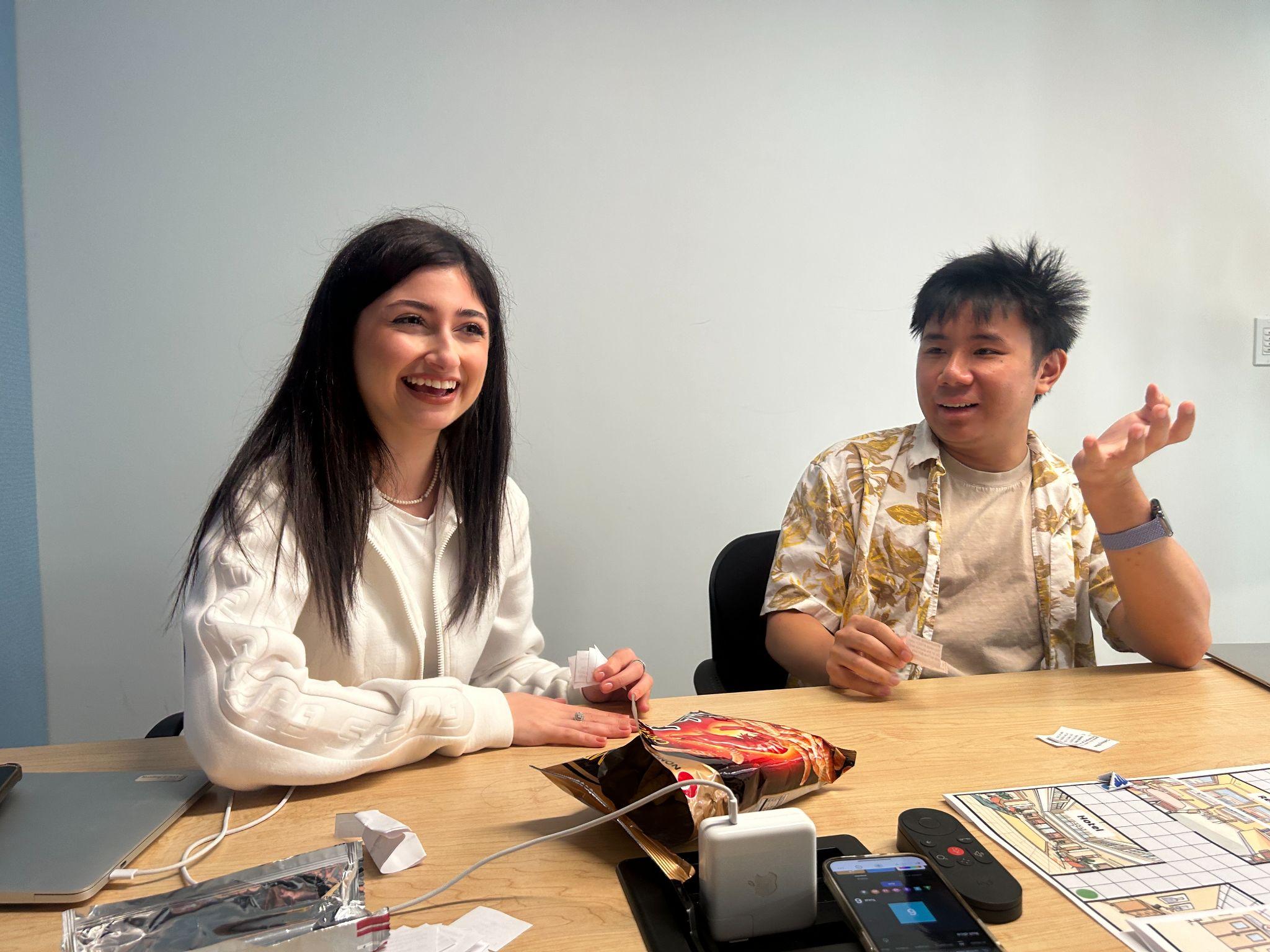
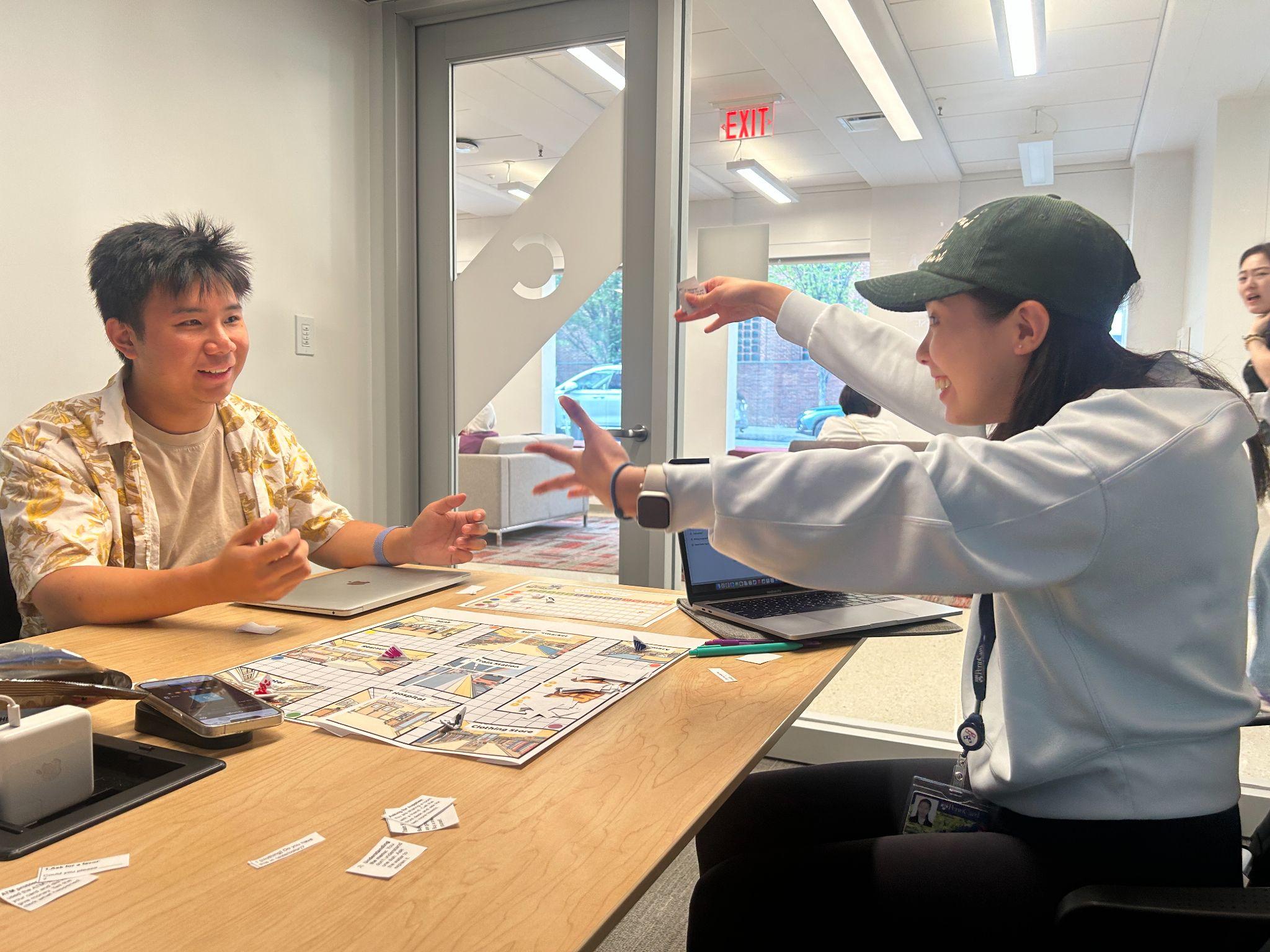
Participation over a single winner
Harder challenges let some players advance much faster. We changed the ending from one player reaching 15 points to three players reaching 15, keeping more people involved.
Everyday English practice,
reimagined as a board game.
A scenario-based learning experience where adult English learners explore a town, tackle real-life tasks, and put language into action.
CEFR B1 adult English learners, including newcomers, immigrants, and international students. Instructor-led classes.
Collaborative game and instructional design, learning activities, prototyping, playtesting, and iteration.
University of Pennsylvania graduate coursework.
Collaborative project with Ann Chang, Aashna Patel, and Hanson Qi.
Physical board prototype · Quest and challenge cards · Dice · Player tokens · Scoreboard
Knowing grammar and vocabulary doesn't always translate into confident, spontaneous conversation.
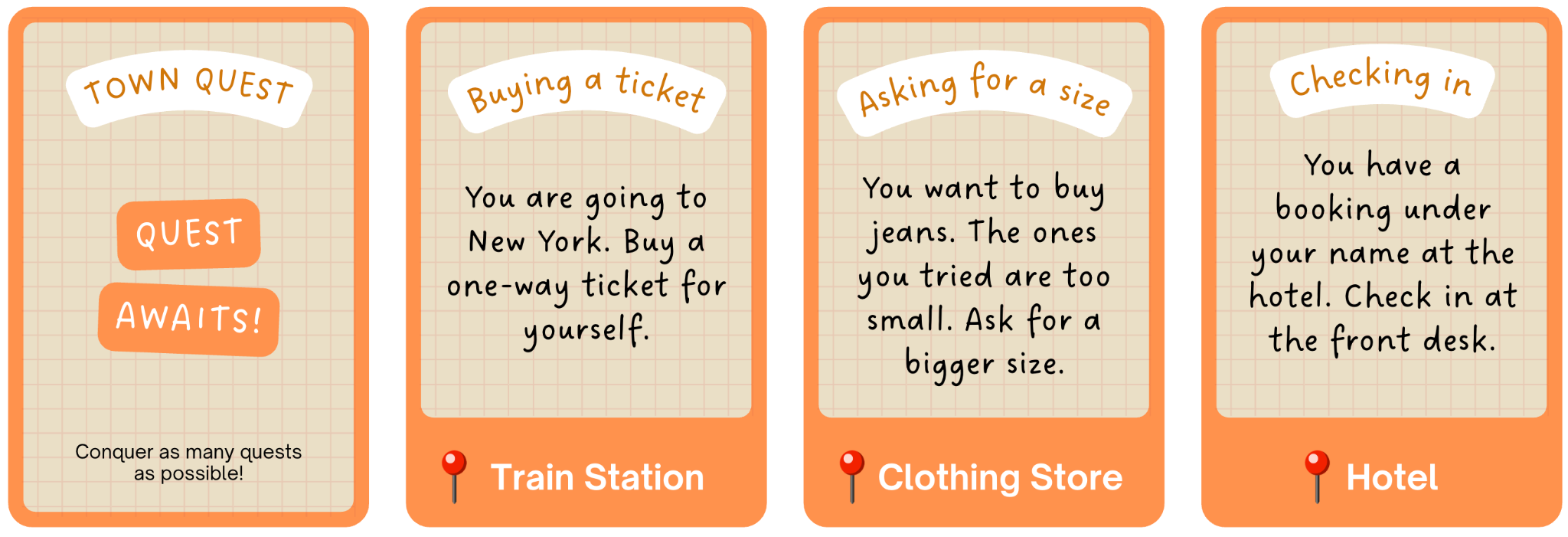
We designed Town Quest to close that gap: learners use English to accomplish a goal, from buying a train ticket to explaining symptoms at a doctor's office.
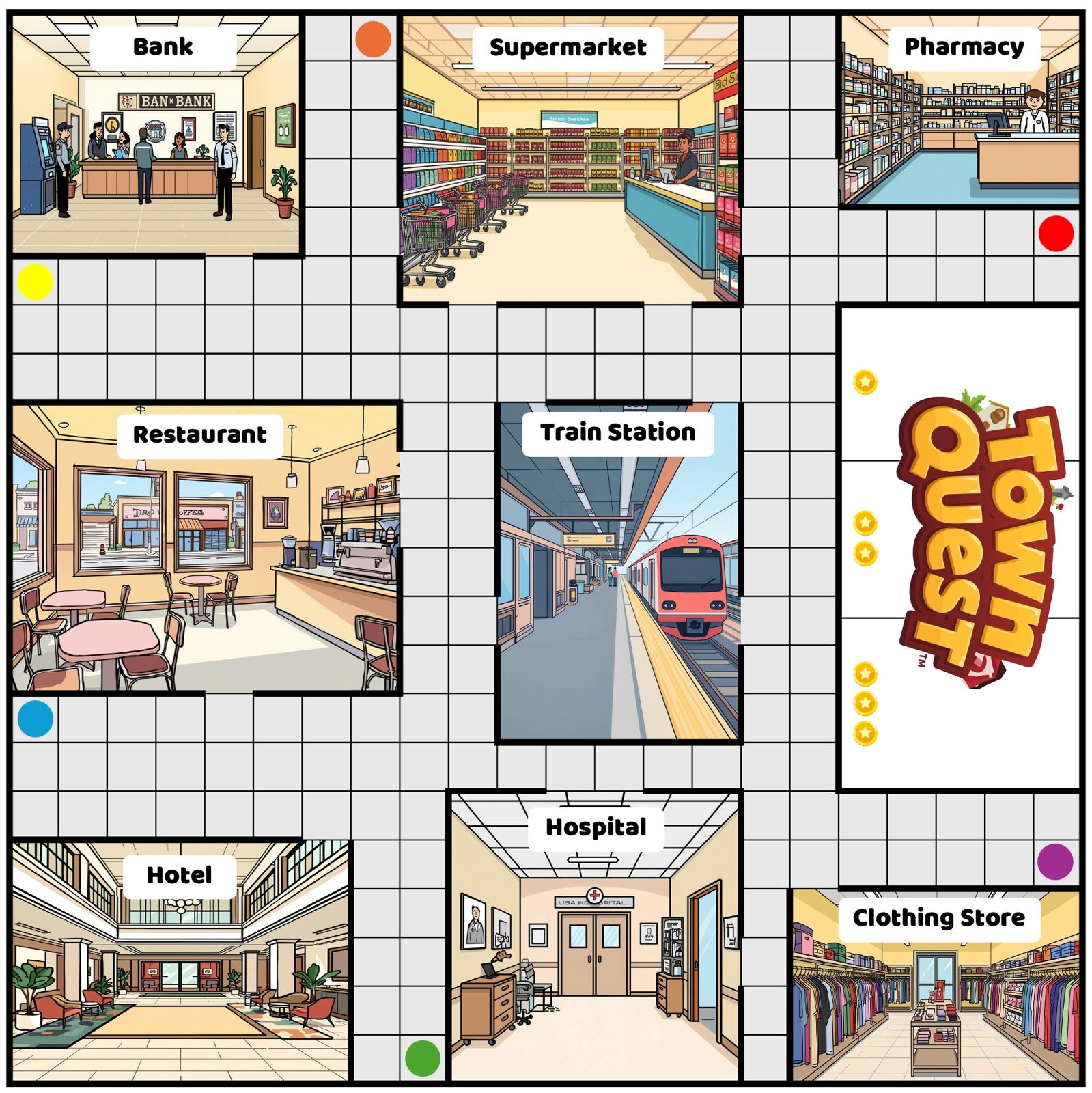
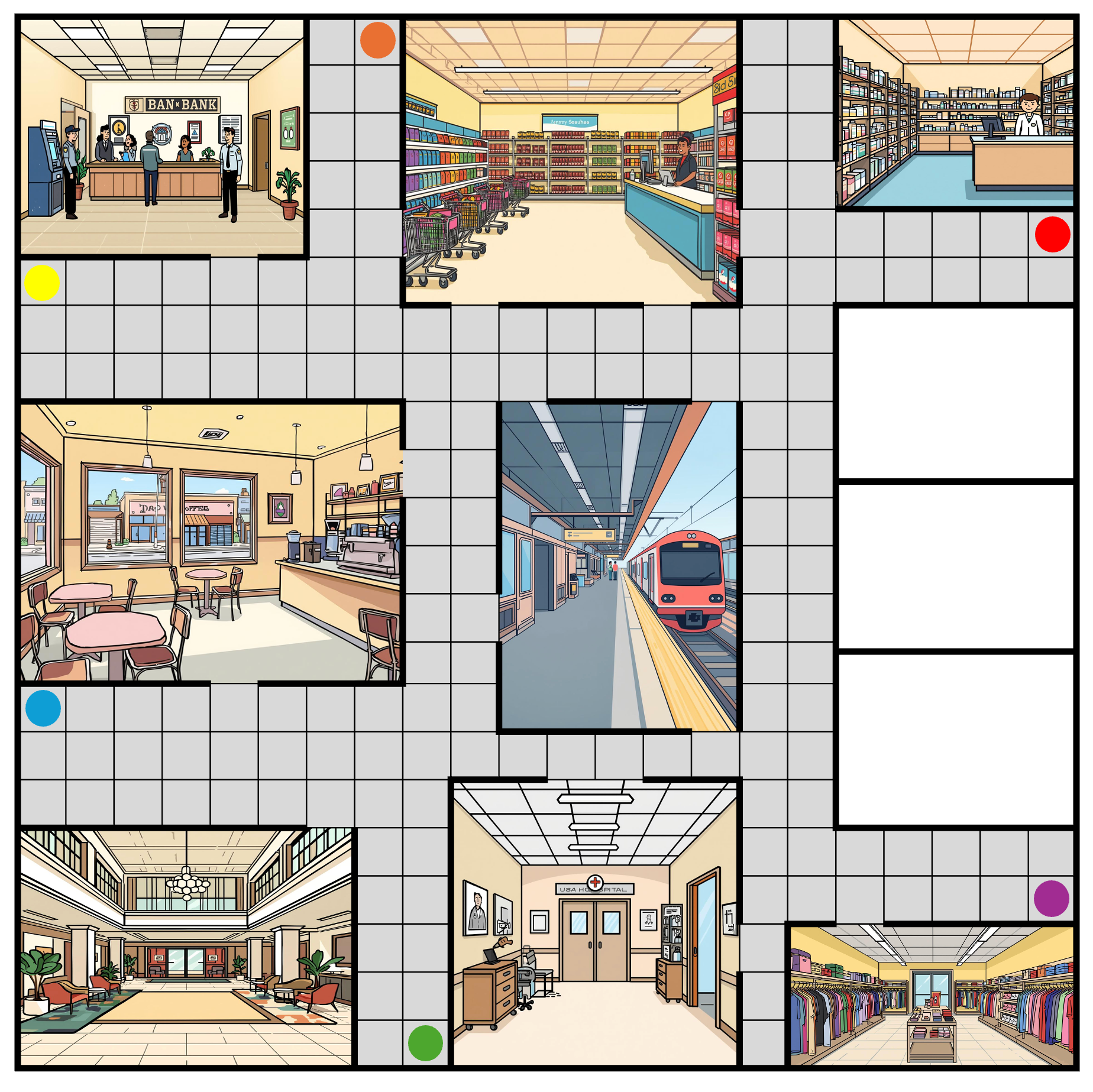
We built scenarios around eight familiar locations: the train station, clothing store, hotel, bank, supermarket, restaurant, pharmacy, and hospital.
Task-Based and Communicative Language Teaching shaped the focus on meaningful interaction, not isolated drills.
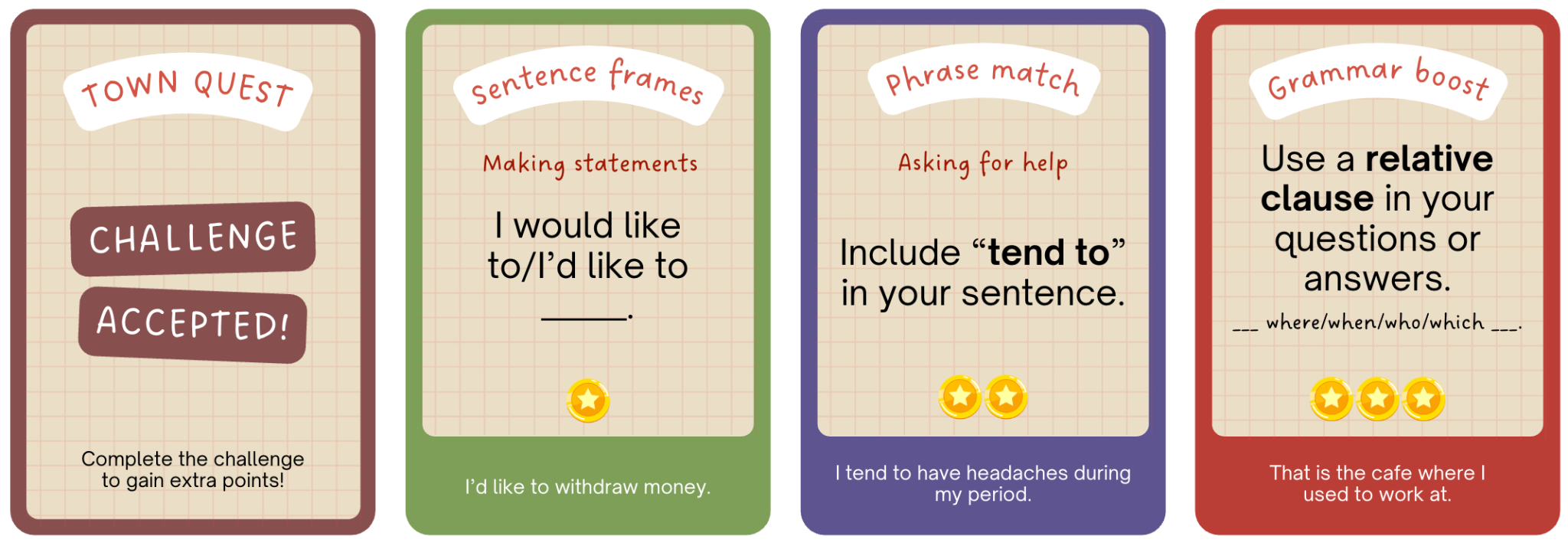
Three difficulty levels offer sentence frames, phrase matching, and grammar challenges. Learners choose the support and stretch they need.
Separating the quest from its language requirement helps keep cognitive demands manageable.
Peer conversations, instructor feedback, and self-correction create a cycle of practice, reflection, and another attempt.
Clear goals and game mechanics support engagement without replacing the learning goal.
Board iterations refined location labels and navigation. A separate scoreboard made progress visible, freeing players to focus on speaking.
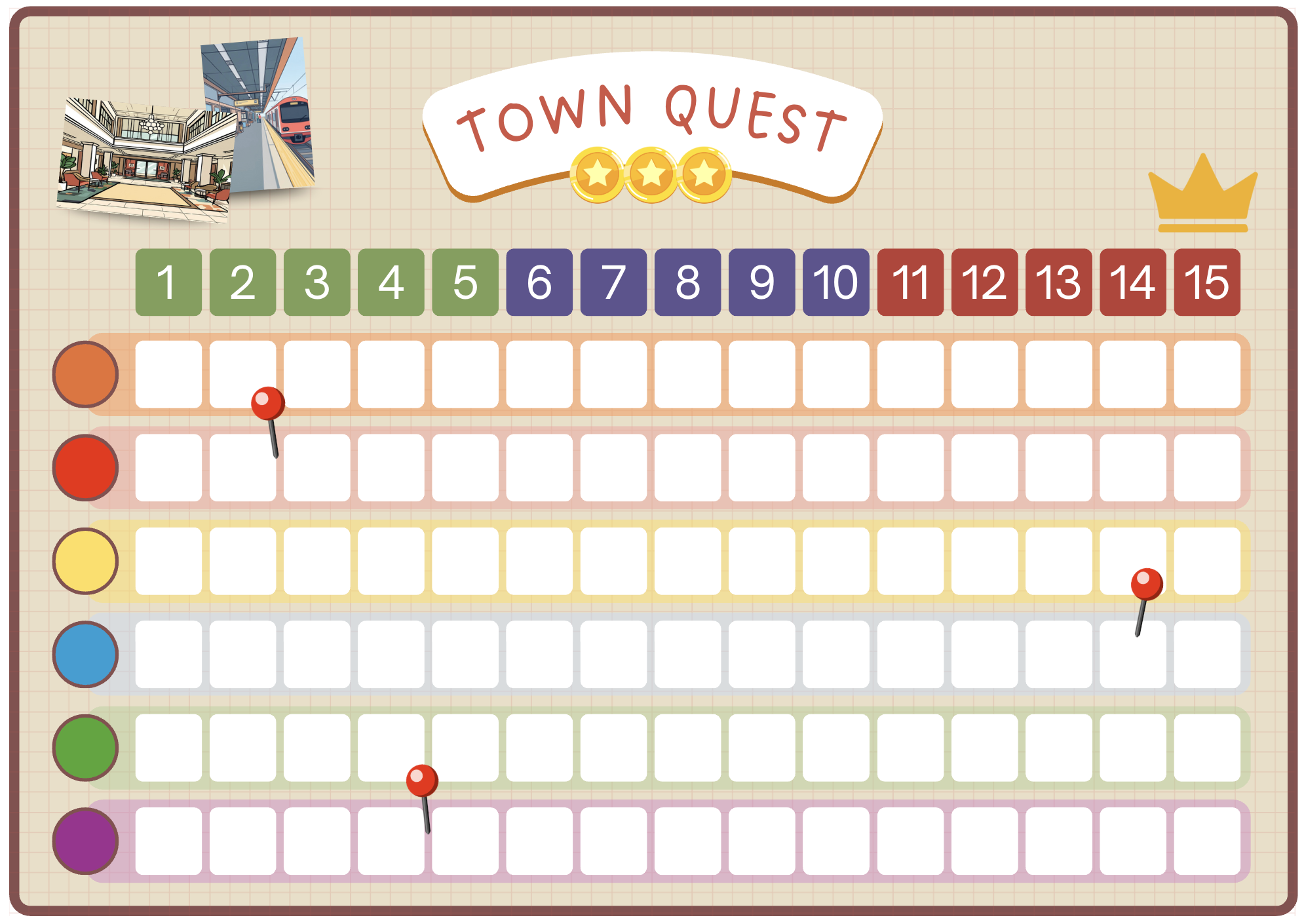
Harder challenges let some players advance much faster. We changed the ending from one player reaching 15 points to three players reaching 15, keeping more people involved.
Moving across the board took time away from speaking. Two dice, diagonal movement, and portals helped players reach their next conversation sooner.
We added greeting and closing expectations, plus a 30-second or 10-sentence requirement, to give role-play more structure.